A Search That Never Quite Ends
Many of us grow up believing that success and wealth will finally make us happy —“if only I had more, I’d be content.” It’s a natural instinct: one major U.S. survey found most people locate their sense of meaning in family, career, and money before anything else — yet plenty of people who have all three still feel a quiet emptiness. Even after a great night out, a long-awaited promotion, or a dream holiday, something inside still feels unfinished. We keep busy, chase achievement, and buy more — but the emptiness has a way of returning.
Pew Research Center, “Where Americans Find Meaning in Life,” 2018.
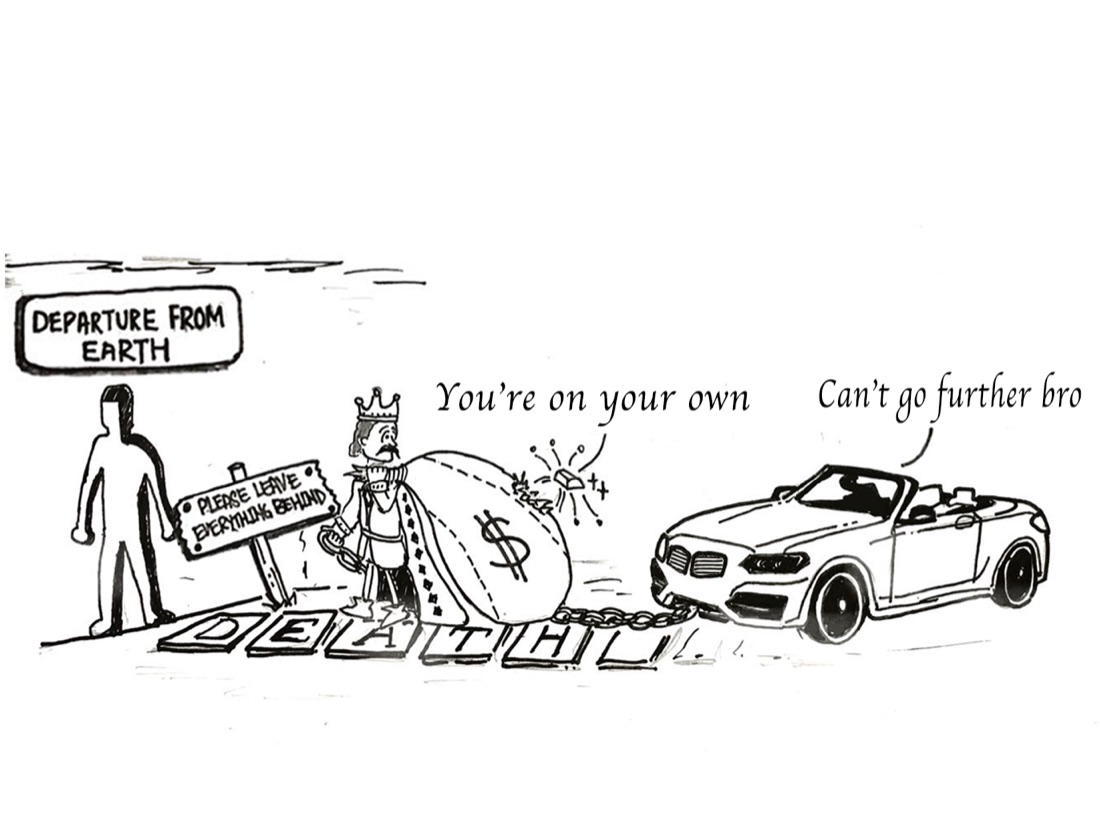
Many people spend their whole lives working long hours to afford homes, cars, and comforts they barely have time to enjoy, all while pushing the next generation to run the very same race. Jesus once asked a piercing question about this kind of life:
“For what shall it profit a man, if he shall gain the whole world, and lose his own soul?”Mark 8:36
If we became the richest, most accomplished people alive but never discovered why we’re here, we would have lived our whole lives without answering the one question that matters most. And that question is urgent — none of us knows how much time we have.
Made for a Purpose
The Bible opens with a breathtaking claim: a real Creator deliberately made the world — and deliberately made us. When we stand before mountains, oceans, and stars, something in us senses this is true.
“For the invisible things of him from the creation of the world are clearly seen, being understood by the things that are made, even his eternal power and Godhead; so that they are without excuse.”Romans 1:20
Theologians call this general revelation — what creation itself declares about its Maker, available to anyone who simply looks up.
“The heavens declare the glory of God; and the firmament sheweth his handywork.”Psalm 19:1
But nature alone can’t tell us why we’re here, or what God is like up close. For that, the Bible offers something fuller — special revelation: God’s own words about who He is and why He made us. Of everything God made, only human beings were made in His image, with the unique capacity to know, love, and worship Him.
“So God created man in his own image, in the image of God created he him; male and female created he them.”Genesis 1:27
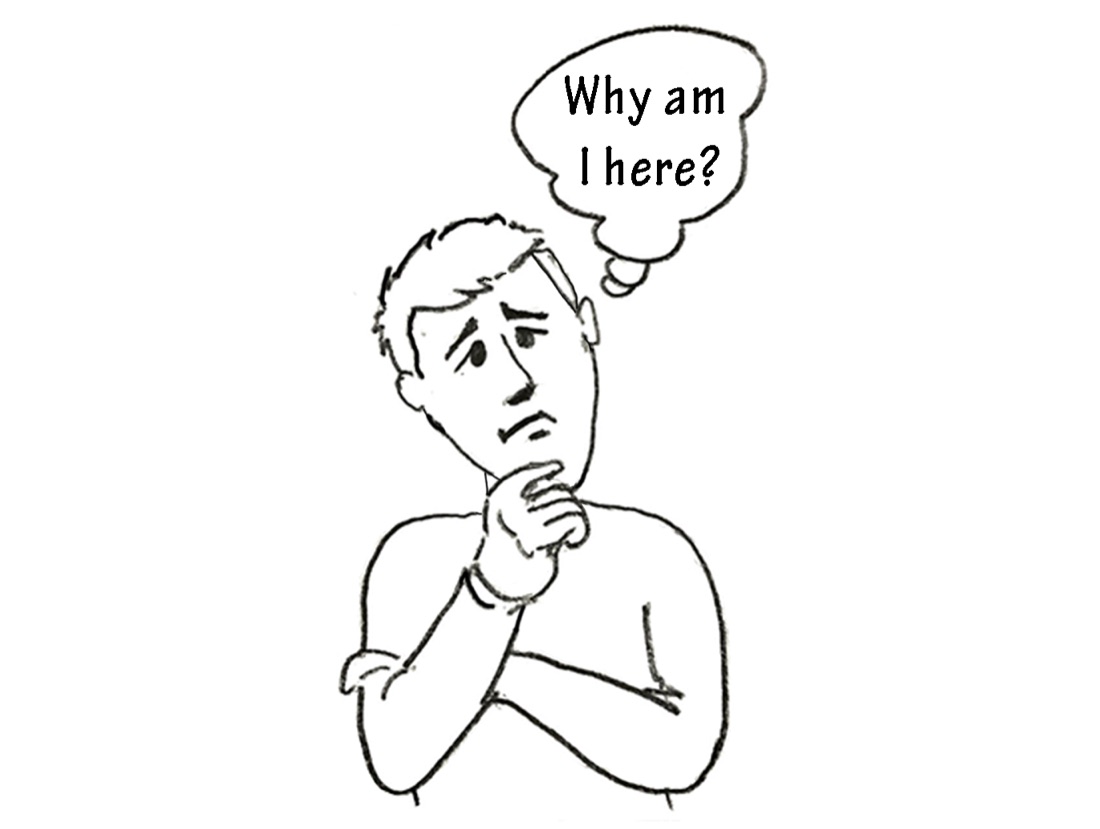
A Rebellion We All Share
But the Bible doesn’t stop at a happy creation story. Our first parents, Adam and Eve, chose to disobey God — and that choice broke the perfect relationship between man and God. We are no different. By nature, we are self-centred: we lie, we quarrel when we don’t get our way, and we want to run our own lives instead of submitting to God’s.
“The heart is deceitful above all things, and desperately wicked.”Jeremiah 17:9
The Bible calls this sin — not just “bad behaviour,” but a refusal to worship the God who made us. And none of us are exempt.
“For all have sinned, and come short of the glory of God.”Romans 3:23
Left to ourselves, this rebellion leaves us facing death and separation from God.
“For the wages of sin is death; but the gift of God is eternal life through Jesus Christ our Lord.”Romans 6:23
Good News in the Middle of the Bad
Here’s what makes the Christian message good news: God did not leave us alone in our misery.
“But God commendeth His love toward us, in that, while we were yet sinners, Christ died for us.”Romans 5:8
God sent His own Son, Jesus, to take the punishment we deserved, so that anyone who trusts Him could be forgiven and receive eternal life.
“For God so loved the world, that He gave His only begotten Son, that whosoever believeth in Him should not perish, but have everlasting life.”John 3:16
Perhaps you’re thinking, “I’m a good person — I don’t really need saving.” But the Bible is clear that no one can earn their way to God through good behaviour. Even our best efforts are tainted by self-interest.
“For by grace are ye saved through faith; and that not of yourselves: it is the gift of God: not of works, lest any man should boast.”Ephesians 2:8-9
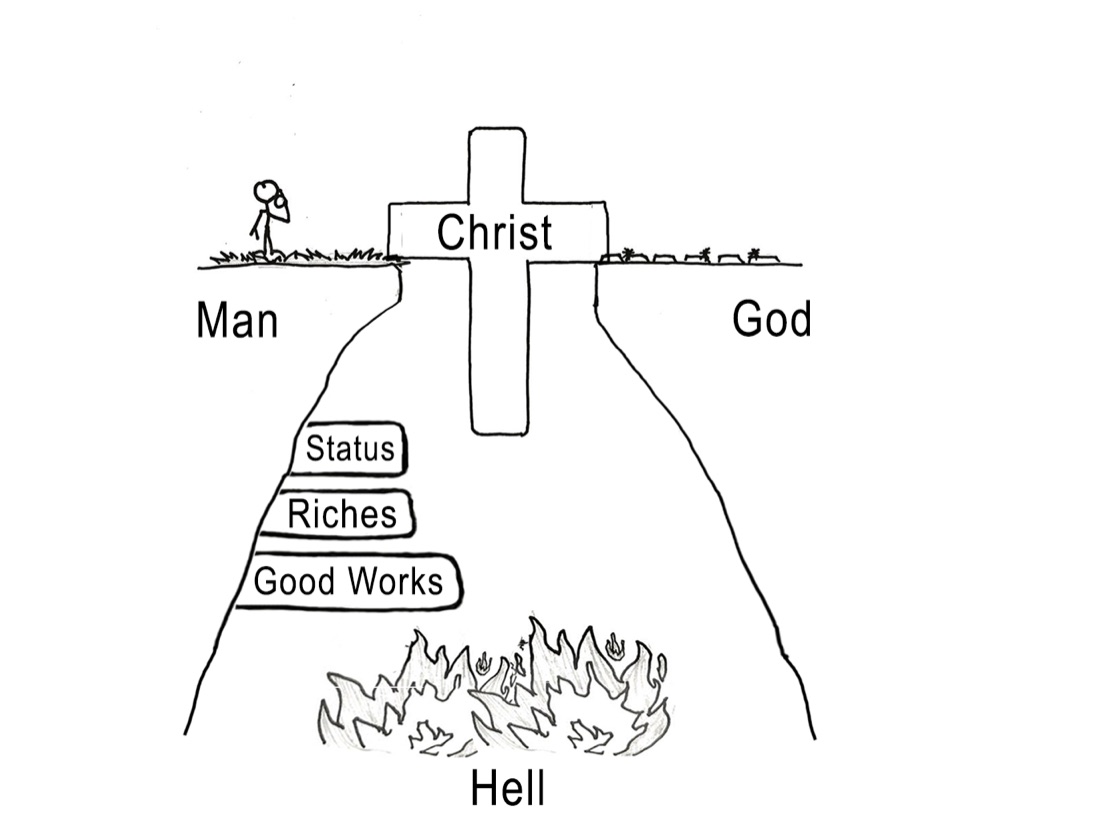
“Jesus saith unto him, I am the way, the truth, and the life: no man cometh unto the Father, but by me.”John 14:6
So, What Is the Meaning of Life?
The old catechism answer still stands: we exist to glorify God and enjoy Him forever — to love the God who made us, and to be loved by Him, forever. When we try to live entirely on our own terms, ignoring our Creator, we experience exactly the emptiness we started with. But when we come to Jesus, that emptiness is finally met.
“I am the bread of life: he that cometh to me shall never hunger; and he that believeth on me shall never thirst.”John 6:35
Don’t wait for a more convenient time to consider this. Death gives no second chances. Whatever else you do with your life, don’t waste it chasing things that were never going to satisfy your soul.
Curious where that “glorify God and enjoy Him forever” line comes from? See pastor Greg Salazar's essay "The Chief Ends of Man?" on the Puritans who wrote it.
Can't We Just Make Our Own Meaning?
Plenty of people who don't believe in God still insist life is meaningful — see how their answers hold up in "Can Life Have Meaning Without God?"
Why Not Just Stay Undecided?
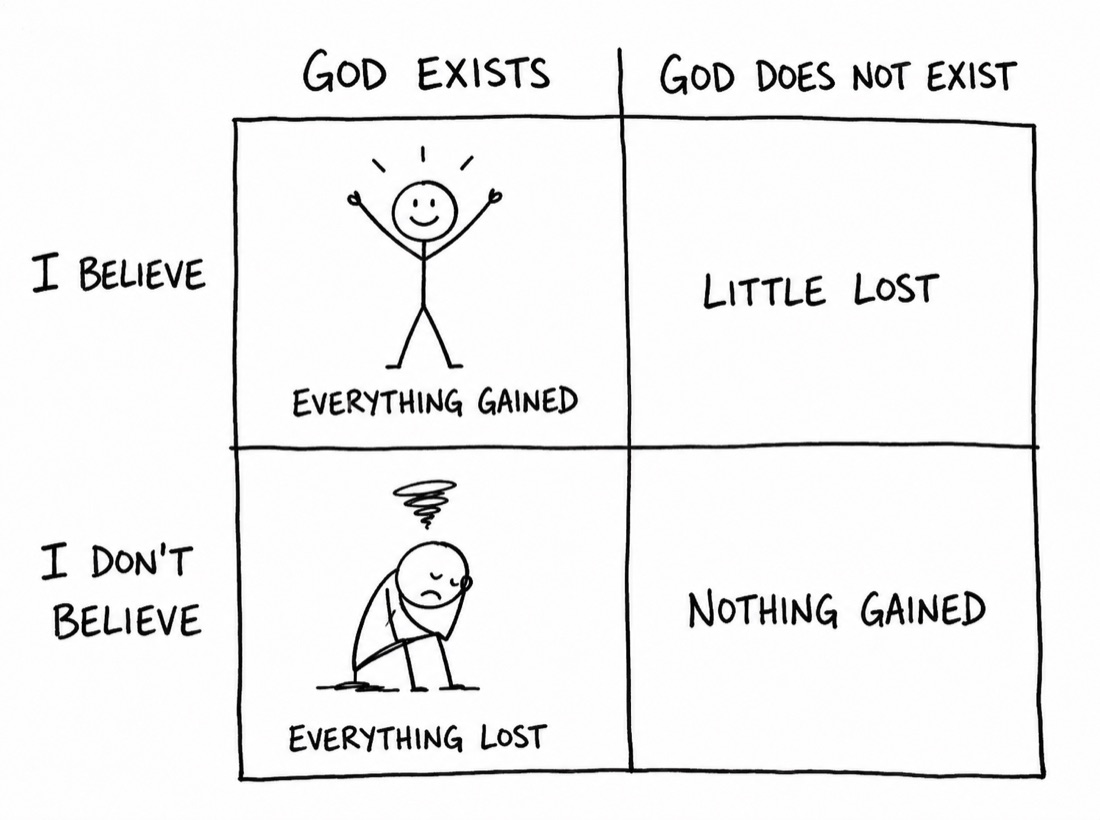
Maybe you’re not ready to say you believe — but you’re not ready to dismiss it either. That’s a very human place to sit. The philosopher Blaise Pascal offered a way to think about that hesitation: weigh not just what’s true, but what’s at stake in each answer.
| God exists | God does not exist | |
|---|---|---|
| I believe | Everything gained | Little lost |
| I don’t believe | Everything lost | Nothing gained |
If God is real, believing costs us little and gains us everything — forgiveness, purpose, and life with Him forever. If we’re wrong about that, we’ve lost very little, and gained the fuller life this chapter has already described. But if we dismiss the question and God is real, the loss is total, and there’s no getting that decision back once we’re gone. Pascal’s point isn’t that fear should decide our faith — it’s that indifference isn’t the safe, cost-free option it feels like.
Without Christ, we have a hopeless end. With Christ, we have an endless hope.
Summary
- God created us in His image to know and worship Him.
- We rebelled against God, and that rebellion — sin — cost us our relationship with Him.
- God sent Jesus to pay the penalty for our sin so we could be forgiven.
- Believing in Jesus, not good works, is what restores us to God.
- True meaning is found in knowing and enjoying our Creator, not in status, riches, or achievement.
Consider This
- Before reading this, what did you think the purpose of life was?
- Does it surprise you that the Bible says we were made to glorify God and enjoy Him forever? What are your thoughts?
- What is stopping you from believing this good news today?
- If you’re still unsure, what would it cost you to find out for certain — and what might it cost you not to?
Take The Next Step
Want to explore this further? Join our Seeker’s Class: John — Life in His Name — Sundays, 8.30am (Room 2-9) or 9.40am (Room 4-3) at Life Bible-Presbyterian Church, 10 Gilstead Road.
Sign Up for the Seeker’s Class