A Question We All Ask
Every day, the news brings fresh stories of natural disaster, war, and economic hardship. Suffering also shows up much closer to home — in illness, in family conflict, in the quiet strain of work and money, in disappointment and grief. Sooner or later, we all ask the same question: if God is all-powerful and always good, why does He allow so much suffering?
A Perfect Beginning
The Bible’s answer starts further back than we might expect — at the very beginning, before there was any suffering at all.
“In the beginning God created the heaven and the earth.”Genesis 1:1
God made the world good — no sickness, no disaster, no death. Man alone was made in God’s own image, free from sin, enjoying perfect fellowship with his Creator.
That perfection wasn’t idle. God gave Adam meaningful work to do, and everything he needed to enjoy it.
“And the LORD God took the man, and put him into the garden of Eden to dress it and to keep it … Of every tree of the garden thou mayest freely eat.”Genesis 2:15-16
“And God saw every thing that he had made, and, behold, it was very good.”Genesis 1:31
What Broke It
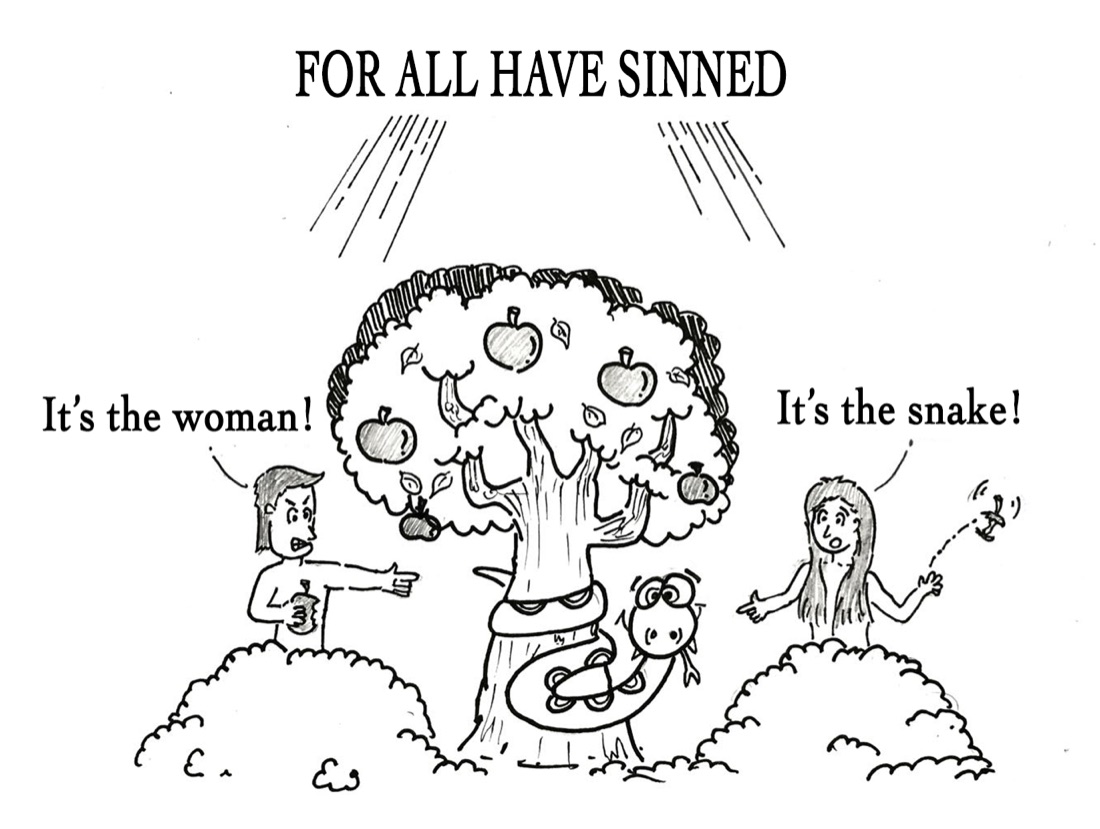
God gave Adam and Eve one simple boundary — not to eat from a particular tree — with a clear warning of what disobedience would cost. Satan, through the serpent, twisted God’s word and convinced Eve that God was withholding something good from her. She ate; Adam ate. And in that moment, everything changed.
“And when the woman saw that the tree was good for food, and that it was pleasant to the eyes, and a tree to be desired to make one wise, she took of the fruit thereof, and did eat, and gave also unto her husband with her; and he did eat.”Genesis 3:6
The change was instant. Where there had been nothing to hide, Adam and Eve suddenly felt naked and ashamed.
Why the World Feels Broken
Scripture traces four consequences flowing directly from that first act of rebellion.
Relationships and daily life grew hard. The ease between Adam and Eve gave way to friction, and even the labour of building a family would now come mixed with sorrow.
“Unto the woman he said … I will greatly multiply thy sorrow and thy conception; in sorrow thou shalt bring forth children.”Genesis 3:16a
The physical world became imperfect. The ground would resist Adam’s work; thorns, hardship, and eventually natural disasters entered a world that had known none of it.
“Cursed is the ground for thy sake; in sorrow shalt thou eat of it all the days of thy life.”Genesis 3:17
Physical death became certain. Where death was once unknown, our bodies now wear out and fail.
“For dust thou art, and unto dust shalt thou return.”Genesis 3:19
Spiritual death — separation from God — followed immediately.Adam and Eve, once at ease in God’s presence, now hid from Him in shame.
“Adam and his wife hid themselves from the presence of the Lord God amongst the trees of the garden.”Genesis 3:8
This wasn’t only Adam’s problem. As our representative, his rebellion — and its consequences — passed to every one of us.
“Wherefore, as by one man sin entered into the world, and death by sin; and so death passed upon all men, for that all have sinned.”Romans 5:12
No amount of good behaviour can undo this. Our very nature is bent toward sin, and that shows up in the small, ordinary unkindnesses of daily life as much as in the headline tragedies.
“There is none righteous, no, not one … there is none that doeth good, no, not one.”Romans 3:10-12
For a fuller treatment of why a good, all-powerful God permits evil, see Joe Rigney's essay "Confronting the Problem(s) of Evil".
Looking for Answers Elsewhere?
Stoicism, hedonism, "it's all an illusion" — see how the common ways people cope with suffering hold up in "How Do People Try to Make Sense of Suffering?"
A Promise in the Wreckage
Even as God pronounced judgment, He also made a promise — that a future offspring of Eve would one day crush the power that had ruined them.
“And I will put enmity between thee and the woman, and between thy seed and her seed; it shall bruise thy head, and thou shalt bruise his heel.”Genesis 3:15
That promised offspring is Jesus Christ. His death and resurrection are God’s answer to the suffering sin unleashed — not by ignoring it, but by absorbing its penalty Himself, so that all who trust Him will one day live in a world with no more suffering at all.
“For the wages of sin is death; but the gift of God is eternal life through Jesus Christ our Lord.”Romans 6:23
None of this can be earned. It’s a gift — which is exactly what makes it grace.
“For by grace are ye saved through faith; and that not of yourselves: it is the gift of God: not of works, lest any man should boast.”Ephesians 2:8-9
“And God shall wipe away all tears from their eyes; and there shall be no more death, neither sorrow, nor crying, neither shall there be any more pain: for the former things are passed away.”Revelation 21:4
Summary
- God created a perfect world with no suffering, sickness, or death.
- Man rebelled against God, and that rebellion broke the world and our relationship with our Creator.
- Suffering, sickness, and death are consequences of that rebellion, inherited by all of us.
- We cannot undo this brokenness through our own effort.
- God promised — and delivered — a Saviour who will one day end suffering for good.
Consider This
- Genesis 3:16-19 describes what followed Adam’s sin. Where do you see this playing out in the world today, or in your own life?
- Do you agree that “there is none righteous, no, not one”? Why or why not?
- Does knowing suffering has an explanation — and an ending — change how you carry it?
Take The Next Step
Want to explore this further? Join our Seeker’s Class: John — Life in His Name — Sundays, 8.30am (Room 2-9) or 9.40am (Room 4-3) at Life Bible-Presbyterian Church, 10 Gilstead Road.
Sign Up for the Seeker’s Class